Official Signals
Reflects the 2025 NFHS rules year. Built from the 2025 NFHS Football Rules Book — the penalty summary (pp. 94–95) and the signal numbers printed in the PENALTY statements throughout Rules 3 through 10. Last checked August 28, 2026.
Verify against the current rule book and VPA guide before teaching this as authoritative.
Why the numbers matter
Every PENALTY statement in the rulebook names its signal. Rule 9-3 ends like this:
PENALTY: Art. 2 – Blocking Below the Waist – (S40) – 15 yards; Art. 3 – Blocking After Signal – (S43) – 15 yards; Art. 4 – Blocking Kicker or Place-Kick Holder – (S30) – 15 yards; Art. 5 – Blocking in the Back – (S43) – 10 yards; Art. 6 – Chop Block (S41) – 15 yards; Art. 6 – Clipping – (S39) – 15 yards; Art. 7 – Illegal Block – (S43), live ball foul, 10 yards.
Learn the numbers and the rulebook tells you what to signal without a second lookup. It also means a crew can talk in shorthand — "thirty-eight, forty-five, offense" is unambiguous.
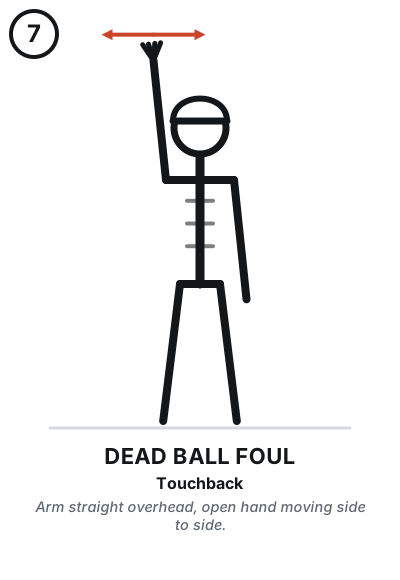
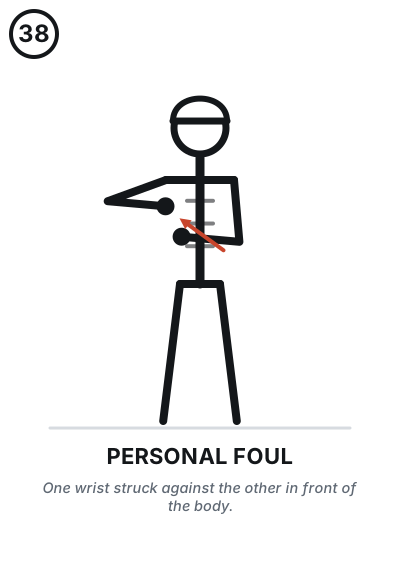
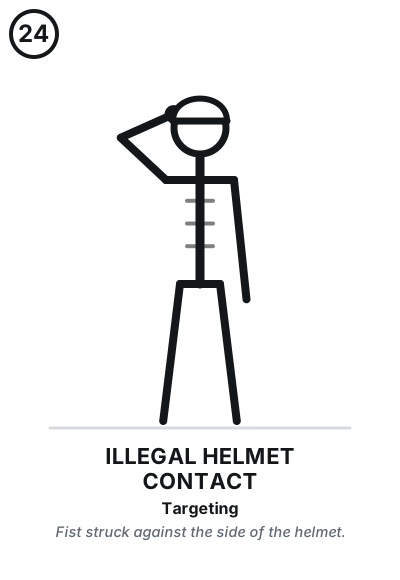
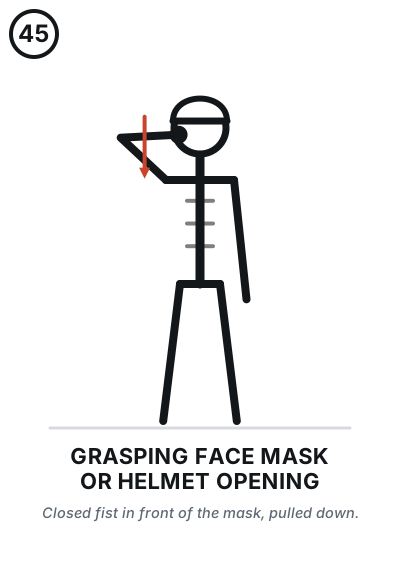
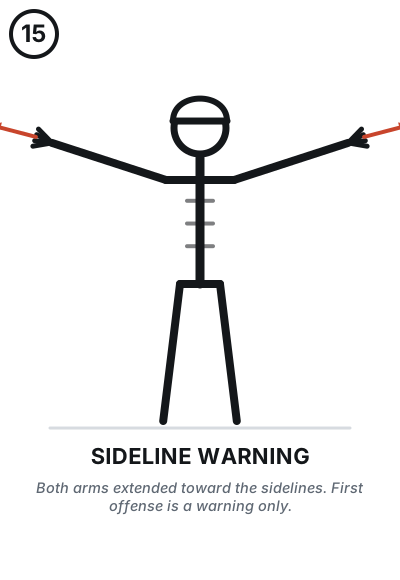
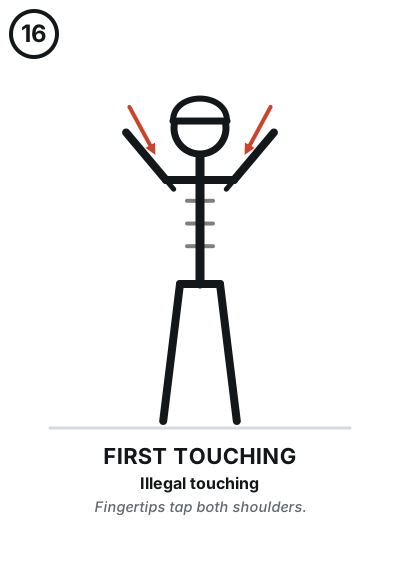
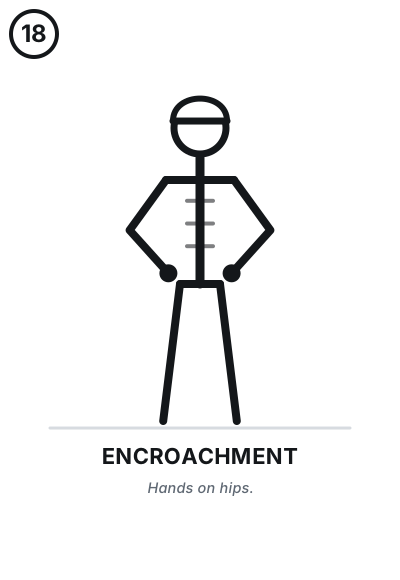
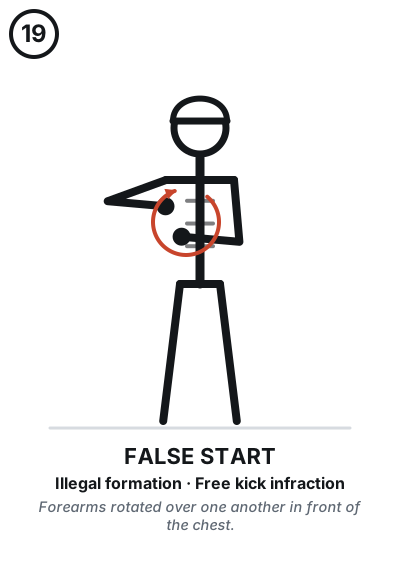
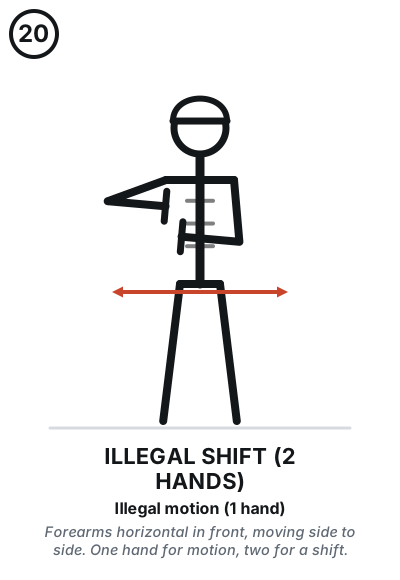
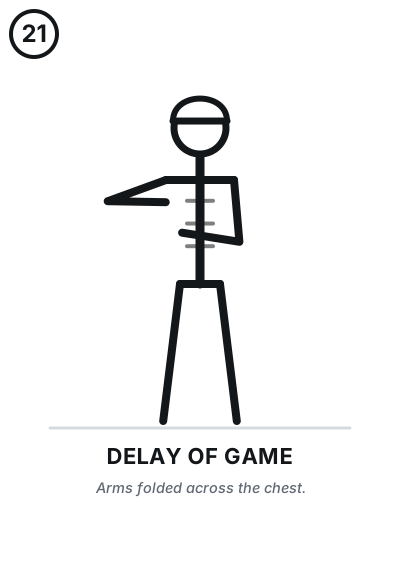
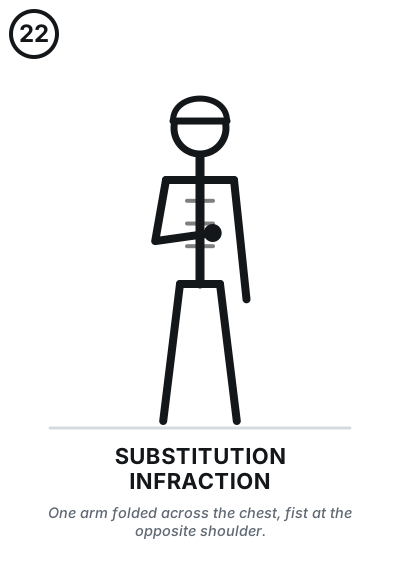
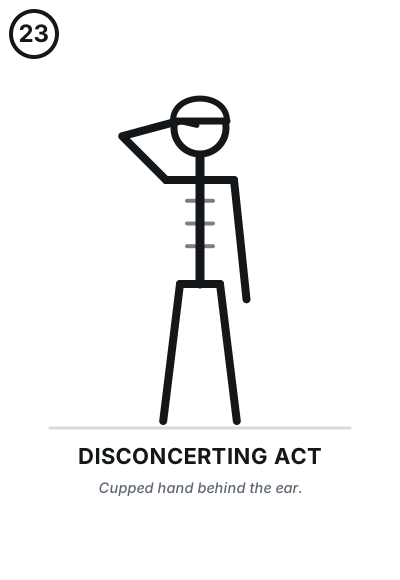
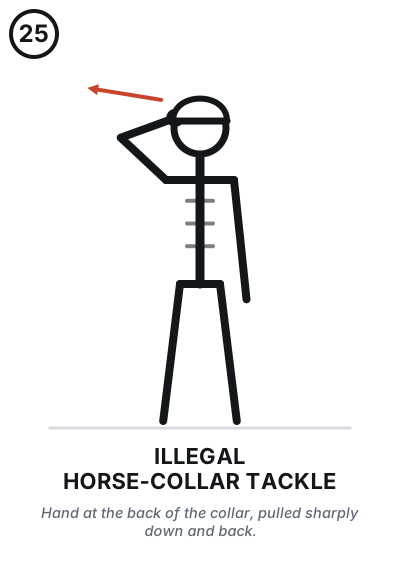
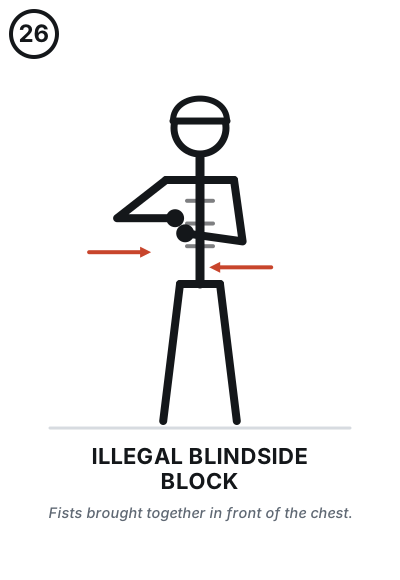
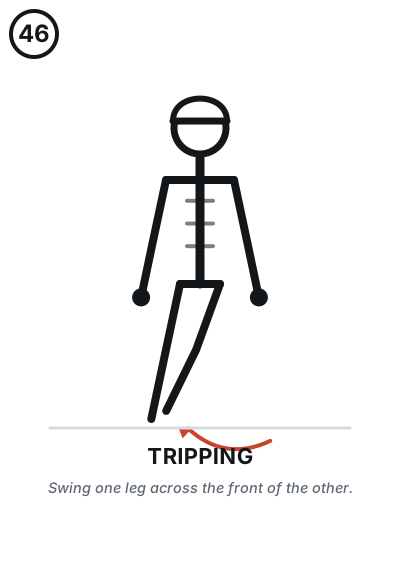
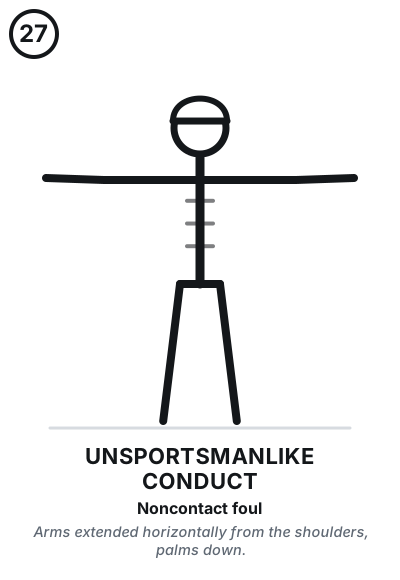
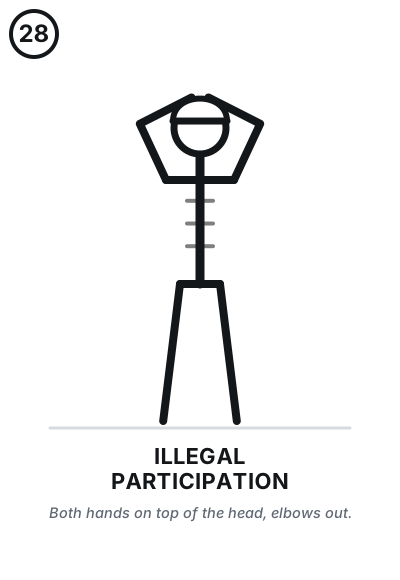
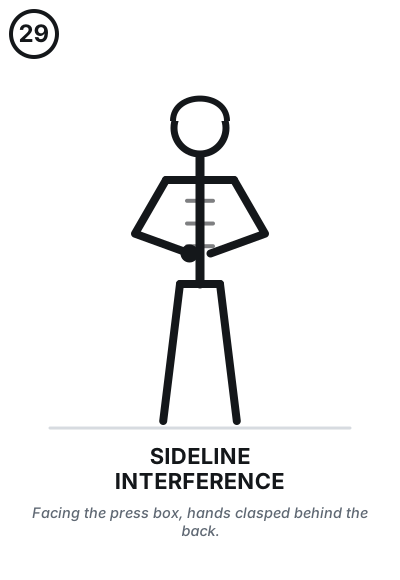
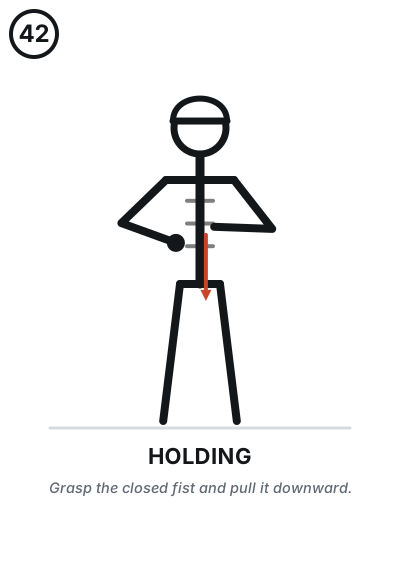
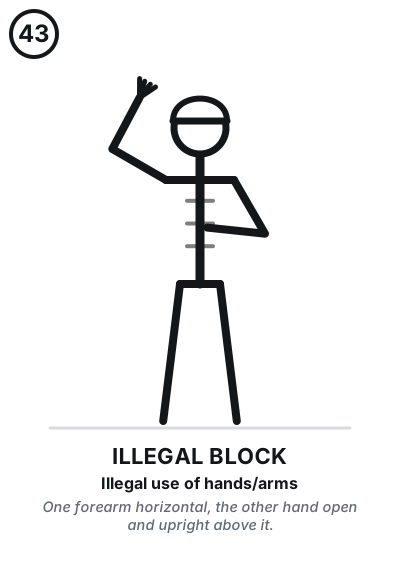
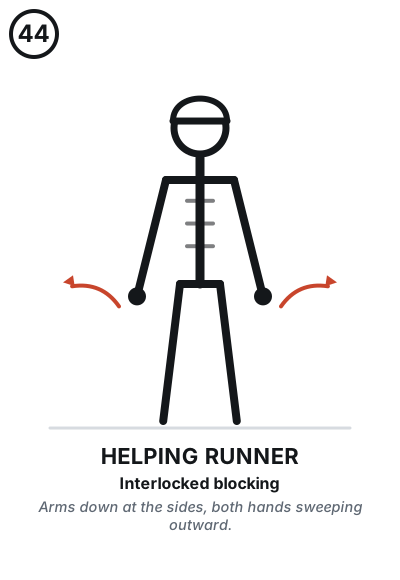
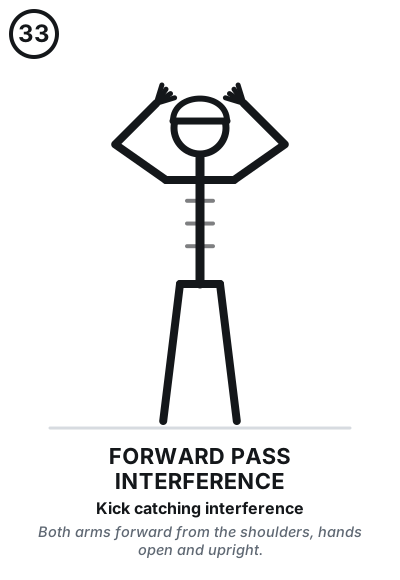
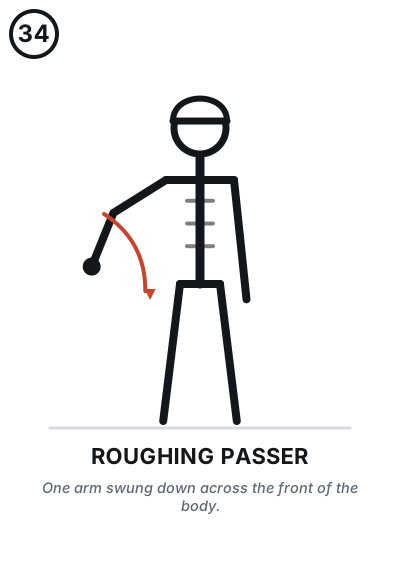
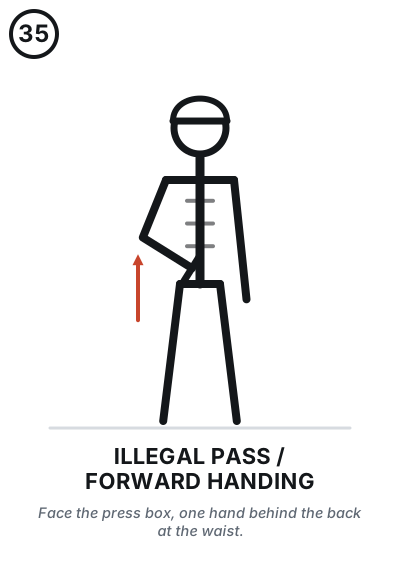
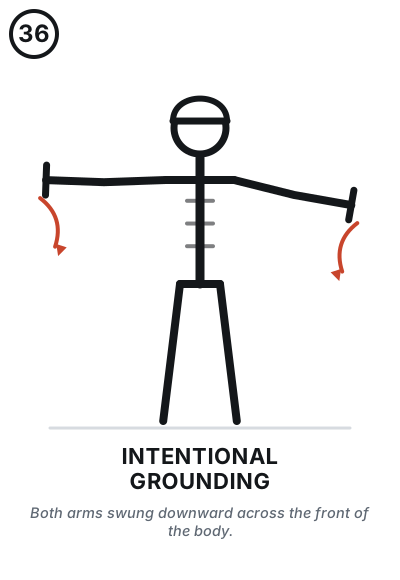
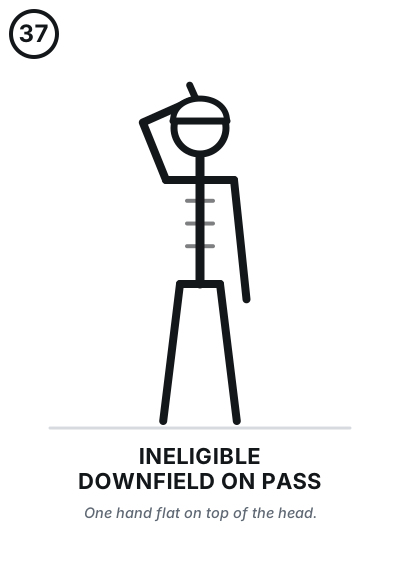
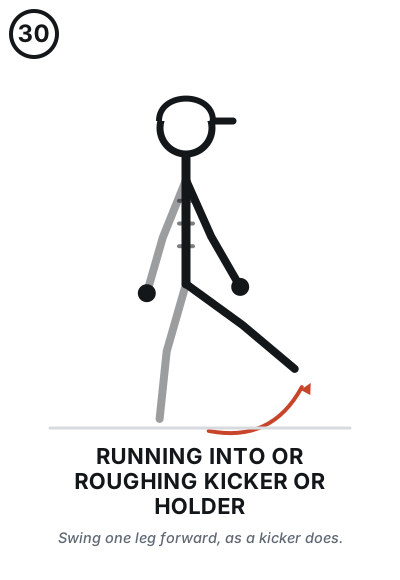
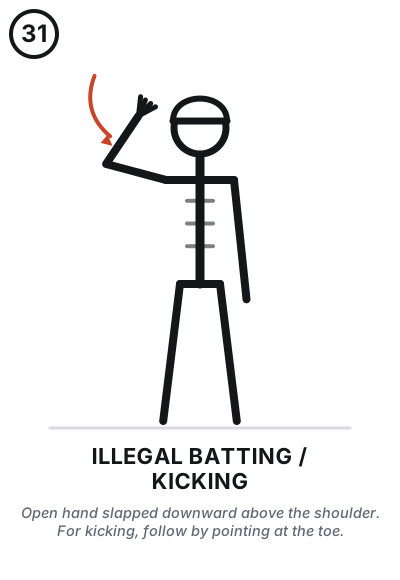
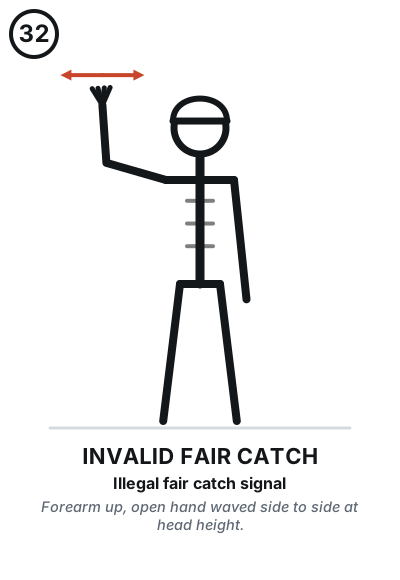
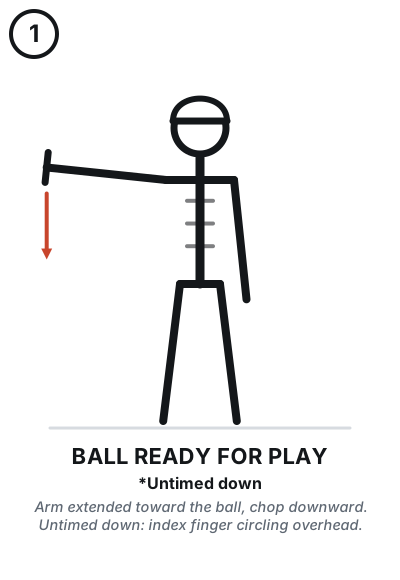
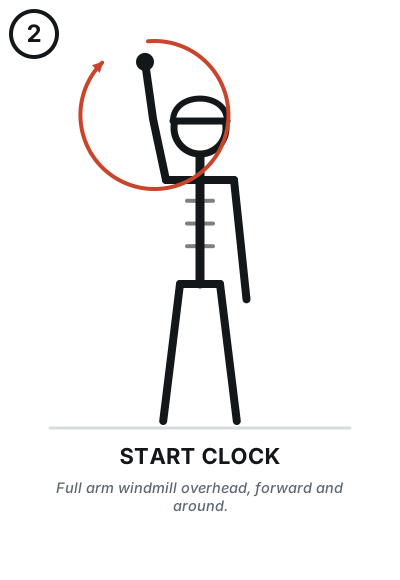
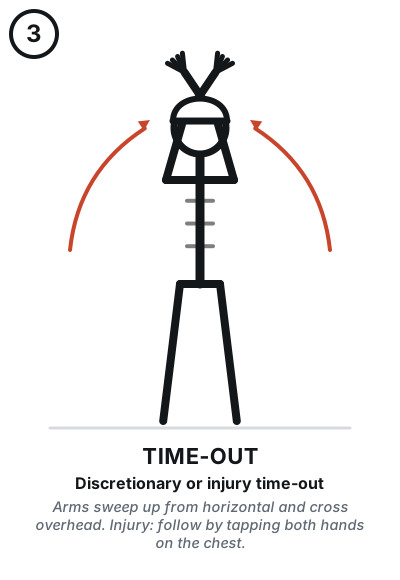
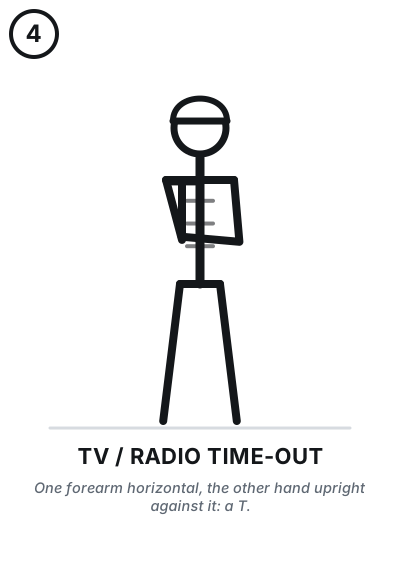
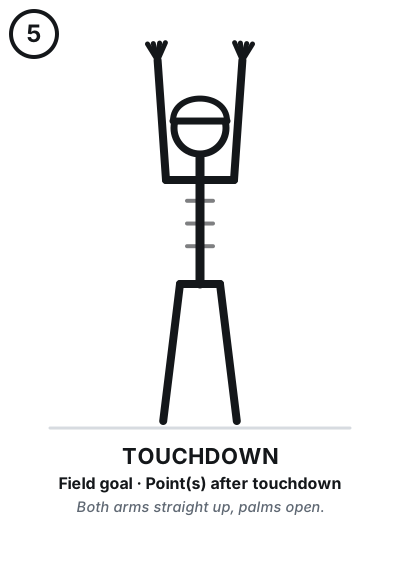
On the illustrations: the drawings on this page are our own stick figures, one per signal and numbered to match the chart, so S38-24 in the rules book points at the same two pictures here. They are original drawings of the motions — the NFHS chart's own artwork is copyright Referee and is neither reproduced nor traced. Each drawing carries the chart's caption and a one-line note on the motion, and a red arrow where the signal moves.
Where a drawing and the printed chart disagree, the chart wins. It is on pages 96–97 of your rules book, and on the official signals PDF at nfhs.org.
1. Who signals
None of the mechanics in this section come from the rules book — they are officials'-manual practice and crew convention, and they vary by association. Confirm them in pregame.
Only the referee signals fouls to the press box. Everyone else reports — the covering official gives the referee the foul, the number, and the team, and then goes to explain it to their coach. Signaling from the wing is standard in college and the NFL and wrong here, because a second official may have a different foul on the same snap.
Other officials do give the administrative signals in their own areas: stop-the-clock, touchdown, incomplete pass, and so on.
The signals a crew gives each other are a different chart entirely — eleven players, double sticks, unbalanced line, snapper protection, the five-second visible count. Those are on Crew Communication and When in Question.
Mechanics for the white hat:
- Come to a complete stop before you start. Don't walk through your signals.
- Face the press box. Every foul signal, every time.
- Pick a spot about halfway up the stands and keep your head up.
- No facial expression. You are neither pleased nor annoyed.
- Don't jab the arm on the point to the offending team.
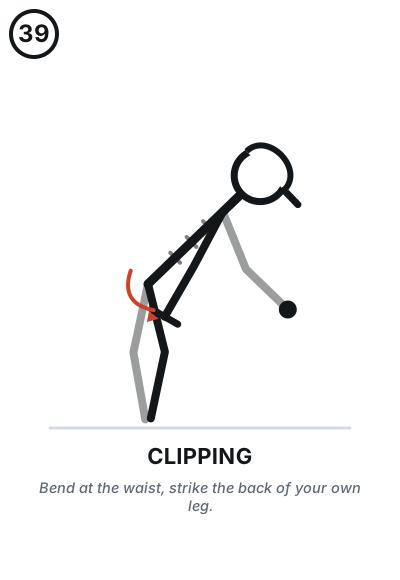
- Stand up straight. Clipping and blocking below the waist require bending at the waist; almost nothing else does — including penalty declined.
- You don't need to be between the hashes. Clear of players is enough.
2. How the codes are built
Signal numbers chain together, and the chains follow three consistent patterns.
S7 is the dead-ball prefix
When the foul happened while the ball was dead, the dead-ball signal comes first, then the foul.
| Code | Meaning |
|---|---|
S7-18 |
dead ball, then encroachment (6-1-3a, 7-1-1) |
S7-19 |
dead ball, then false start / snap infraction / free-kick infraction (7-1-2, 7-1-7) |
S7-21 |
dead ball, then delay of game (3-6-2, 3-6-3, 3-6-4) |
S7-22 |
dead ball, then illegal substitution — the dead-ball version of the foul (3-7) |
S7-23 |
dead ball, then disconcerting act (7-1-9) |
S7-27 |
dead ball, then unsportsmanlike conduct (9-5, 9-8-1) |
S7-29 |
dead ball, then sideline interference (9-8-1k) |
Note the pair in Rule 3-7: illegal substitution is S7-22 when it's a dead-ball foul and plain S22 when it's a live-ball or nonplayer foul. The prefix carries real information.
S38 is the personal-foul umbrella
Most contact fouls are the personal foul signal followed by a modifier that says which one. S38-24 and S38-45 are the two you will give most — the umbrella first, then the modifier.
| Code | Foul | Rule |
|---|---|---|
S38 |
personal foul, no further specification — charging an opponent out of the play, hurdling, contact with a helmet-less opponent, forceful contact on a defenseless receiver, slapping a blocker's head | 9-4-3, 9-4-3d, 9-4-3p, 9-4-7 |
S38-24 |
illegal helmet contact — butt block, face tackle, spear, targeting, contact against a defenseless player | 9-4-3i, 9-4-3m |
S38-25 |
horse-collar | 9-4-3 |
S38-26 |
illegal blindside block | 9-4-3n |
S38-29 |
illegal personal contact in the restricted area | 9-4-8 |
S38-45 |
grasping the face mask, helmet opening, chin strap, or attached tooth and mouth protector | 9-4-3 |
S38-46 |
tripping | 9-4-3o |
S38-47 |
personal foul with disqualification — fighting, contacting an official, striking/kicking/kneeing | 9-4-1, 9-4-2, 9-4-3j |
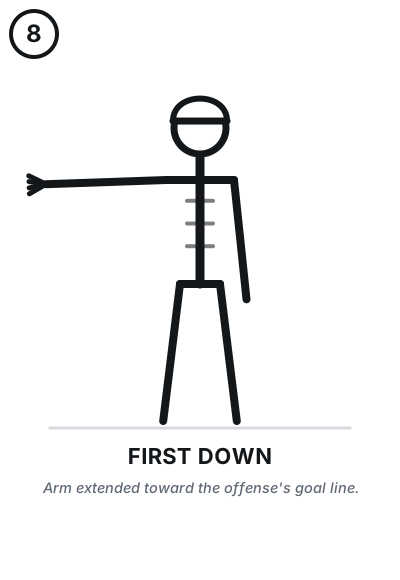
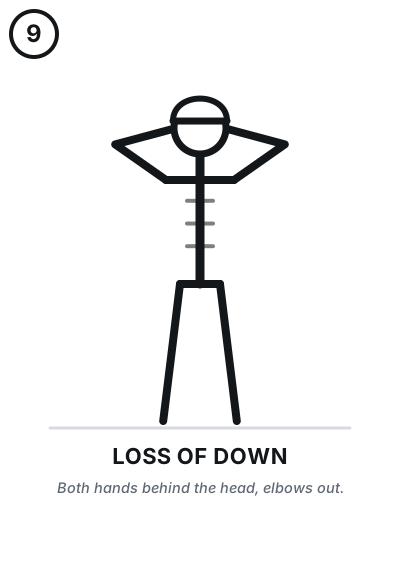
S8 and S9 are suffixes
They go at the end, after the foul and the team.
| Code | Meaning |
|---|---|
S35-9 |
illegal forward pass, also loss of down (7-5-2) |
S36-9 |
intentional grounding, also loss of down (7-5-2d) |
S16-9 |
illegal touching, also loss of down (7-5-13) |
S38-34-8 |
personal foul, roughing the passer, automatic first down (9-4-4) |
S38-30-8 |
personal foul, roughing the kicker or holder, automatic first down (9-4-5) |
S38-8 |
personal foul, roughing the snapper, automatic first down (9-4-6) |
Roughing the passer and roughing the kicker carry the full chain — umbrella, specific foul, first down — while roughing the snapper has no signal of its own and is simply S38-8. Running into the kicker is S30 alone: 5 yards, no first down.
A few chains worth memorizing whole
| Code | Situation | Rule |
|---|---|---|
S15 |
first nonplayer offense — warning only, no yardage | 9-8-3 |
S7-29 |
second offense — 5 yards | 9-8-3 |
S7-29-27 |
third and subsequent — 15 yards | 9-8-1k, 9-8-3 |
S27-47 |
second unsportsmanlike by the same individual, or a sub leaving the box during a fight — 15 and disqualification | 9-5, 9-8-1l |
3. Signal sequences
Live-ball foul — four steps:
- The foul
- Point toward the offending team
- The next down, or the new-series signal
- Ready-for-play, or start-the-clock — whistle at the same time
Dead-ball foul — four or five steps:
S7, the dead-ball signal- The foul
- Point toward the offending team
- The next down, or the new-series signal
- Ready-for-play, or start-the-clock
Five when the penalty is declined: dead ball, the foul, the team, the declination, then the ready — no down signal, because the down has not changed. The officials' manual works the example: Team R is flagged for encroachment before a try and Team K declines because the kicker likes the distance he has.
The dead-ball signal is not optional on a false start or encroachment. Those two are always preceded by it (§2.2).
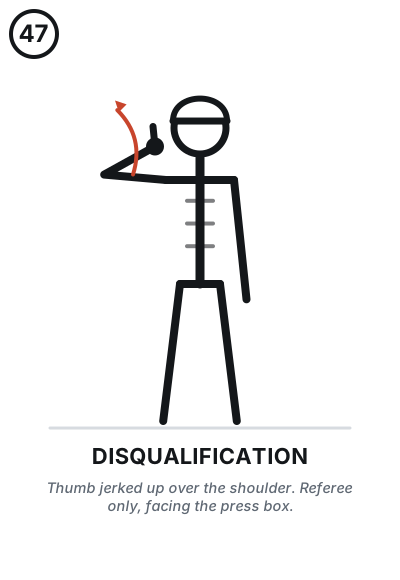
Add loss of down (S9), automatic first down (S8), or disqualification (S47) where the chain calls for it. Disqualification goes after the point to the offending team and before the down.
Self-evident fouls — false start, delay of game, encroachment — don't need a preliminary signal and then a second one after enforcement.
Wait for the head line judge to confirm the chains are set before the ready-for-play.
4. The signals, by number
Numbers and coverage are taken from the 2025 rules book. The drawings and the motion descriptions should be checked against the printed chart before you rely on them — the chart is the authority on how each signal looks.
Ball status, down, and warnings
| No. | Signal | When you give it | Rule |
|---|---|---|---|
| S7 | Dead ball | Prefix for any foul that occurred while the ball was dead. The rules book shows the contrast directly: illegal substitution is S7-22 as a dead-ball foul and S22 as a live-ball foul. |
3-7, 9-5, 9-8 |
| S8 | First down | The new-series signal, and the suffix marking an automatic first down. The number comes from the chart; the rules book uses it only as the trailing digit on the three roughing fouls, which are exactly the three automatic first downs in 10-1-7. | 10-1-7 |
| S9 | Loss of down | Suffix on illegal handing forward, illegal forward pass by A, intentional grounding, and illegal touching — exactly the fouls listed in 10-1-6. The number comes from the chart; the rules book uses it only as a trailing digit. | 10-1-6 |
| S15 | Sideline warning | First nonplayer offense. Warning only — no yardage. | 9-8-3 |
| S16 | Illegal touching | Touching of a forward pass by an ineligible (7-5-13). Fingertips tap both shoulders. | 7-5-13 |
Pre-snap and formation fouls
| No. | Signal | Covers | Rule |
|---|---|---|---|
| S18 | Encroachment | Any player other than the snapper entering the neutral zone after the ready — touching the ball or an opponent, or being in the zone to give defensive signals. Hands on hips. | 6-1-3a, 7-1-1, 7-1-5, 7-1-6 |
| S19 | False start / illegal formation | False start, snap infraction, illegal formation, illegal numbering, planned loose-ball infraction, free-kick infraction, free kick out of bounds, and the 5-yard nonplayer foul of 9-8-2. Forearms rotated over one another in front of the body. | 6-1-2, 6-1-9, 7-1-2, 7-1-7, 7-2-1/2/3/5, 7-2-8, 9-8-2 |
| S20 | Illegal shift or illegal motion | Failure to stop for one second after a shift; more than one player in motion, or motion toward the opponent's goal line. Two hands for shift, one for motion. | 7-2-6, 7-2-7 |
| S21 | Delay of game | Failure to snap in time, and the other delay acts of 3-6-2a–f. | 3-6-2, 3-6-3, 3-6-4, 6-5-5 |
| S22 | Illegal substitution | S7-22 for the dead-ball version, S22 for live-ball and nonplayer versions. |
3-7 |
| S23 | Disconcerting act | Defensive words or acts before the snap intended to interfere with A's signals or movements. | 7-1-9 |
Personal-foul modifiers
| No. | Signal | Covers | Rule |
|---|---|---|---|
| S24 | Illegal helmet contact | Butt block, face tackle, spear, targeting, illegal helmet contact against a defenseless player. Always as S38-24. |
9-4-3i, 9-4-3m, 2-32-16 |
| S25 | Horse-collar | Always as S38-25. |
9-4-3 |
| S26 | Illegal blindside block | Always as S38-26. |
9-4-3n |
| S45 | Face mask | Grasping the face mask, helmet opening, chin strap, or attached mouth protector. S45 alone for the incidental 5-yard grasp; S38-45 for the 15-yard version. |
9-4-3 |
| S46 | Tripping | Always as S38-46. |
9-4-3o |
Conduct
| No. | Signal | Covers | Rule |
|---|---|---|---|
| S27 | Unsportsmanlike conduct | Player and nonplayer unsportsmanlike fouls, nonplayer illegally on the field, unfair acts, hiding the ball under a jersey, illegal kicking tee. Arms extended horizontally from the shoulders, palms down. | 9-5, 9-8-1, 9-9 |
| S28 | Illegal participation | Also participating without a helmet beyond the immediate action. | 9-6, 9-6-4 |
| S29 | Sideline interference | Nonplayer in the restricted area. Given facing the press box. | 9-8-1k, 9-8-3 |
| S38 | Personal foul | The umbrella for illegal personal contact. Striking one wrist against the other, arms downward in front of the body. | 9-4-3 |
| S47 | Disqualification | After the appropriate foul signal. Use the approved signal — not a baseball windup. Only the referee gives it, and only while signaling the press box. | 9-4, 9-5, 9-8 |
Blocking, holding, and use of hands
| No. | Signal | Covers | Rule |
|---|---|---|---|
| S39 | Clipping | 15 yards. One of the few signals that requires bending at the waist. | 9-3-6 |
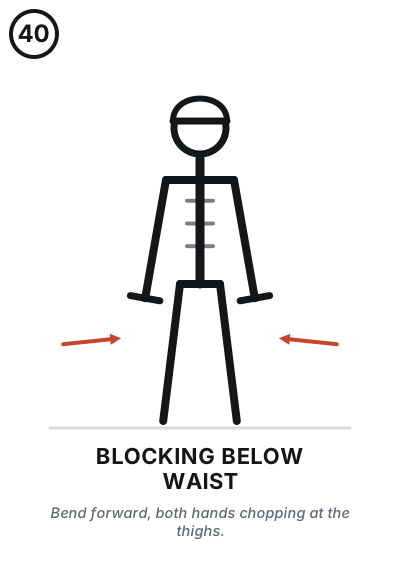
| S40 | Illegal block below the waist | 15 yards. Legal inside the free-blocking zone under 2-17-2. | 9-3-2 |
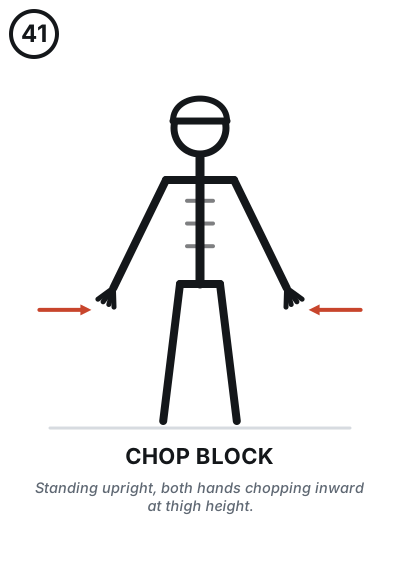
| S41 | Chop block | 15 yards. | 9-3-6 |
| S42 | Holding | 10 yards. Grasping a closed fist and pulling downward. | 9-2-1c, 9-2-3c, 9-2-3e |
| S43 | Illegal use of hands / illegal block | Illegal blocking technique, illegal use of hands or arms, block in the back, illegal block, illegal block on free kicks, blocking after a fair-catch signal, runner grasping a teammate. Mostly 10 yards; 15 yards for the block after a fair-catch signal. | 9-2-1a, 9-2-2, 9-2-3, 9-3-3, 9-3-5, 9-3-7 |
| S44 | Helping the runner / interlocked blocking | Helping the runner is 5 yards; interlocked blocking is 10. Same signal. | 9-1, 9-2-1b |
Passing
| No. | Signal | Covers | Rule |
|---|---|---|---|
| S33 | Interference | Both forward-pass interference and kick-catching interference. Hands open and extended forward from the shoulders. | 6-5-6, 7-5-10 |
| S34 | Roughing the passer | Always as S38-34-8 — umbrella, foul, automatic first down. |
9-4-4 |
| S35 | Illegal forward pass | Also illegally handing the ball forward. Add S9 when it's by A. |
7-3-2, 7-3-3, 7-5-2 |
| S36 | Intentional grounding | Always with S9. |
7-5-2d |
| S37 | Ineligible receiver illegally downfield | 5 yards. | 7-5-12 |
Kicking
| No. | Signal | Covers | Rule |
|---|---|---|---|
| S30 | Running into or roughing the kicker or holder | S30 alone is running into — 5 yards. S38-30-8 is roughing — 15 and an automatic first down. Also used for an illegal block on the free kicker or holder. |
9-4-5, 9-3-4 |
| S31 | Illegal kicking or batting | 10 yards, not 15. Also covers an illegal kick under 6-2-1. | 6-2-1, 9-7 |
| S32 | Invalid or illegal fair-catch signal | 5 yards. After any valid or invalid signal, no receiver may advance (6-5-5). | 6-5-7, 6-5-8 |
| S33 | Kick-catching interference | Same signal, and the same drawing, as pass interference. The receivers get three options — results of the play, an awarded fair catch after a 15-yard penalty from the spot of the foul, or 15 from the previous spot and a replay. | 6-5-6 |
5. Timing and administrative signals
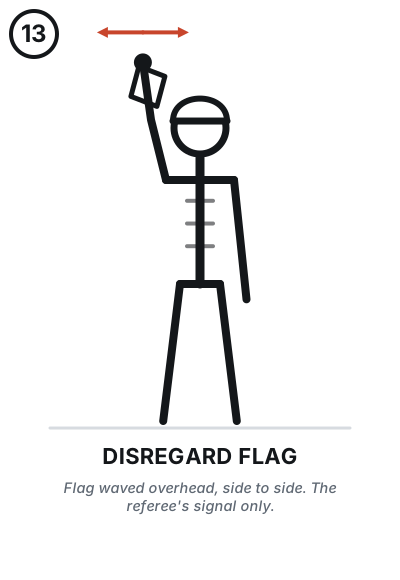
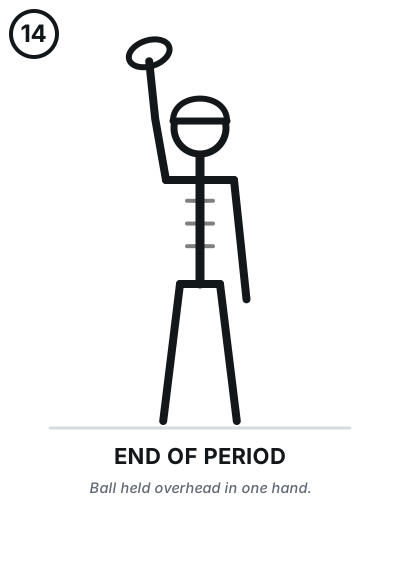
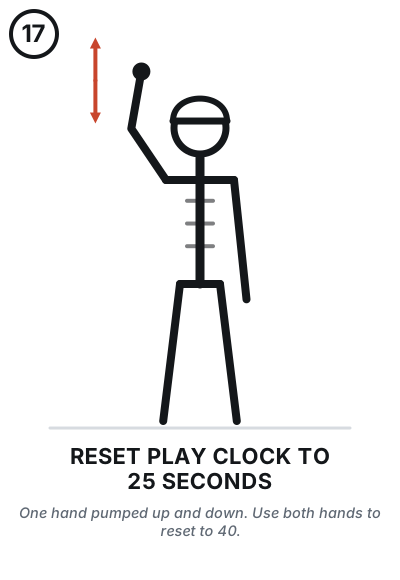
These are the signals you'll give most often, and apart from S7 and S16 the rules book doesn't reference them by number in its PENALTY statements — they carry a number only on the chart itself. The numbers below are the chart's, by way of the drawings; confirm them against pages 96–97 before you teach them.
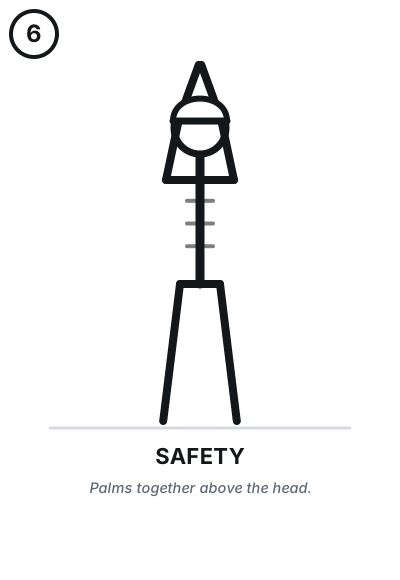
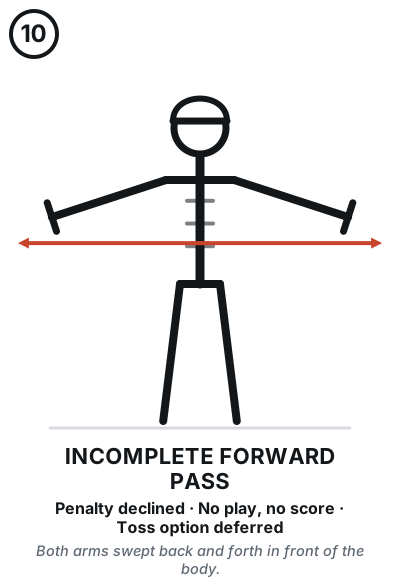
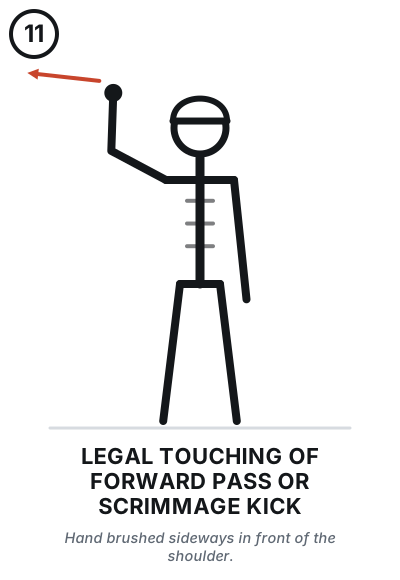
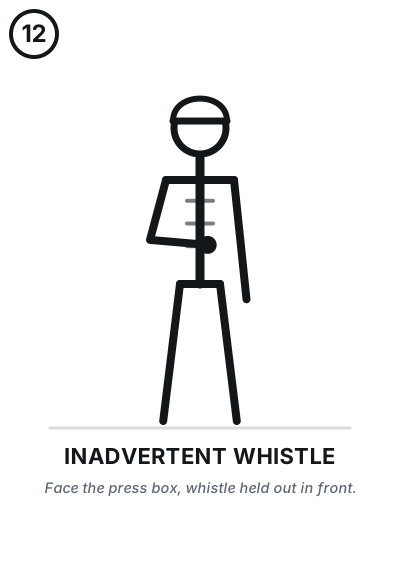
| No. | Signal | Also covers |
|---|---|---|
| S1 | Ball ready for play | Untimed down — index finger circling overhead |
| S2 | Start the clock | |
| S3 | Stop the clock / time-out | Discretionary and injury time-outs. For an injury, follow it by tapping both hands on the chest |
| S4 | TV / radio time-out | |
| S5 | Touchdown | Field goal, point(s) after touchdown |
| S6 | Safety | |
| S7 | Touchback | The same signal as the dead-ball prefix in Section 2 |
| S10 | Incomplete forward pass | Penalty declined, no play, no score, toss option deferred |
| S11 | Legal touching of a forward pass or scrimmage kick | |
| S12 | Inadvertent whistle | |
| S13 | Disregard flag | |
| S14 | End of period | |
| S16 | First touching | The same signal as illegal touching, which is why S16-9 is the illegal-touching code |
| S17 | Reset the play clock to 25 seconds | Right arm straight up, palm up, pumped three times — "pushing the sky". One hand for 25, both hands for 40. An interrupted play clock is always reset to 25, never resumed. |
Two of these carry rules weight worth knowing cold:
First touching is not a foul. It happens when a K player touches a scrimmage kick beyond the expanded neutral zone before R touches it beyond the neutral zone and before the ball comes to rest, and it gives R the option of taking the ball at that spot (6-2-5). There is no first touching in R's end zone — the ball is dead when it breaks the plane. R loses the privilege if R fouls after touching the kick, or if any penalty in the down is accepted.
Disregard flag is the referee's signal alone. If you've thrown a flag you're no longer sure about, tell the referee — but only the referee waves it off.
6. Learning order
If you're starting from zero, this is the order that pays off fastest.
Week one — the ones you give every drive. S1 ready for play, S2 start clock, S3 stop clock, S8 first down, S10 incomplete pass, S5 touchdown, S6 safety, S14 end of period.
Week two — the pre-snap fouls. S18 encroachment, S19 false start and illegal formation, S20 shift and motion, S21 delay, S22 substitution. These are most of what you'll actually signal in a normal game, and they're all self-evident to the crowd, which takes some pressure off.
Week three — the personal-foul family. S38 and its modifiers: S38-24, S38-25, S38-26, S38-45, S38-46, S38-47. Learning S38 as an umbrella rather than six unrelated signals cuts the memorization roughly in half.
Week four — blocking and holding. S42 holding, S43 illegal use of hands, S39 clipping, S40 below the waist, S41 chop block, S44 helping the runner.
Week five — pass and kick. S33 interference, S34 roughing the passer, S35/S36/S37 passing fouls, S30/S31/S32 kicking fouls.
Throughout — the prefixes and suffixes. S7 in front for dead ball, S8 or S9 at the end. These are worth more than any individual foul signal because they apply everywhere.
Sources and currency
Signal numbers, coverage, and rule references above come from the 2025 NFHS Football Rules Book — the Penalty Summary on pages 94–95 and the PENALTY statements in Rules 3 through 10.
Three caveats about what is and isn't sourced.
Most signal numbers appear in the book only inside a compound code — S24, for instance, is never printed alone, only as S38-24. The individual meanings given above are consistent with every PENALTY statement in the book, but the chart is what actually assigns them.
The motion descriptions and everything in Section 1 come from officials'-manual practice, not from the rules book.
The drawings, their captions, and the Section 5 numbers follow the 2026 signal chart, while the rule references everywhere else on this page come from the 2025 rules book. The two agree on every number this page uses, but they are different documents and a future chart can renumber. The drawings are ours; the chart's own artwork is copyright Referee and is not reproduced here.
Before the season, check:
- The printed chart, pages 96–97, which is the authority on how each signal looks and on the timing and administrative numbers in Section 5.
- The current year's rules changes, which occasionally alter a signal or renumber the chart.
- Vermont adaptations, which are the binding interpretation for our games.